Posts

Showing posts with the label plants

Red dead nettle (Lamium purpureum)
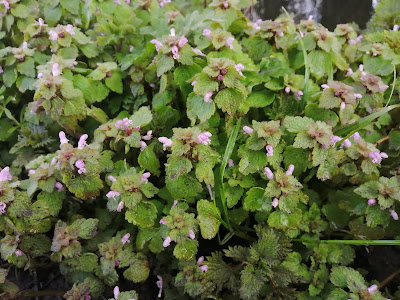
Image
Common name: red dead nettle Species name: Lamium purpureum Plant type: perennial herb Origin : Europe and Asia, native to the UK. Flowering period : February to November Description: Very similar to a stinging nettle, but the leaves do not sting and are softer. The flowers are large and dark pink. It grows in patches, mostly in hedgerows and along paths and verges. Location: common . In the SSSI they can be found in hedgerows, by gates, on banks and along the Drove. Possible confusion: stinging nettle and red dead nettles are similar. Stinging nettles are larger, with rougher leaves that sting. White dead nettles are the same height as red dead nettles but have white flowers.
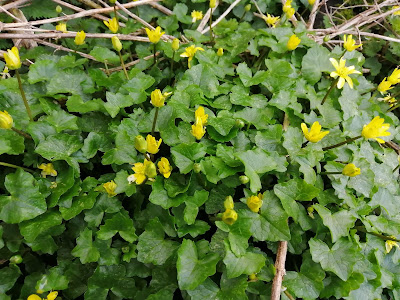
Lesser Celandine (Ficaria verna)

Image
Common name: Lesser celandine Species name: Ficaria verna Plant type: perennial herb Origin : Europe, west Asia and North Africa Flowering period : January to April Description: Low-growing perennial with dark green, glossy heart-shaped leaves with a long stalk. They form low clumps on damp ground, particularly along the Drove banks. The flowers are simple with eight to twelve bright yellow petals, the tips of which fade to white as the flower ages. The flowers close in advance of bad weather and open in the sun so can be used to predict the weather.  Clump of lesser celandine in flower Lesser celandine flower, with some fading to white indicating the flower is getting old Lesser celandine flowers closed due to rain Location: common . In the SSSI they can be found in hedgerows, on banks and along the Drove.  Possible confusion: winter aconite ( Eranthis hyemalis ) which is also low-growing and has similarly-shaped yellow flowers. Howe...

Hogweed (Heracleum sphondylium)

Image
Common name: Hogweed Species name: Heracleum sphondylium Plant type: perennial herb Origin : Europe, central Asia and North Africa Flowering period : June to October Description: Tall umbellifer with white or pinkish flowers . It can reach 2m in height and has hollow, ridged and hairy stems. The flower-heads are large and are popular with insects, particularly flies, hoverflies and common red soldier beetles.  Hogweed in flower Young hogweed plant Flies and hoverflies on hogweed flowers Common red soldier beetles on hogweed flowers Location: common . In the SSSI they can be found in hedgerows, on banks and along the Drove. Possible confusion: there are several other umbellifers that are common. Cow parsley, rough chervil, hedge parsley, and stone parsley are all similar in appearance. I will try and create a comparison chart as they come in flower to show the differences between these species.

White dead nettle (Lamium album)

Image
Common name: white dead nettle Species name: Lamium album Plant type: perennial herb Origin : Europe and Asia, native to the UK. Flowering period : March to December Description: Very similar to a stinging nettle, but the leaves do not sting and are softer. The flowers are large and white. It grows in patches, mostly in hedgerows and along paths and verges. White dead nettle, 08/01/2020 Location: common . In the SSSI they can be found in hedgerows, by gates, on banks and along the Drove. Possible confusion: stinging nettle and red dead nettles are similar. Stinging nettles are larger, with rougher leaves that sting. Red dead nettles are the same height as white dead nettles but have dark pink flowers.

Winter heliotrope (Petasites fragrans)

Image
Common name: winter heliotrope Species name: Petasites fragrans Plant type: perennial herb Origin : southern Europe, naturalised in the UK in the early 1800s . Flowering period : winter (November to March) Description: heart-shaped leaves which can grow up to 20cm across . The leaves are evergreen and form dense mats which can crowd out other species. The flower spikes are quite short, reaching no more than 30cm tall, and have clusters of pale pink or mauve flowers which have a strong sweet scent that fills the air . Cluster of winter heliotropes Winter heliotropes Location: common around the south and west of the UK and Ireland. Within the SSSI I have currently only seen them on the middle drove just down from the gateway to field 160. There is a large cluster on the west side and a smaller cluster on the east. I haven't seen any other patches so far (as of 07/01/2020) but I'm keeping my eyes (and nose!) out for more. Location of winter h...